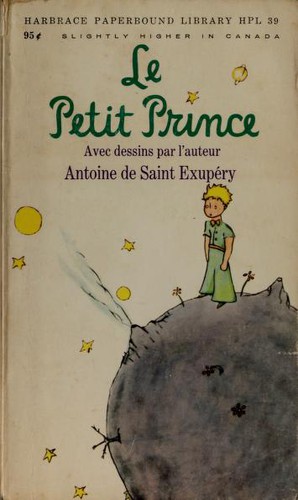
The Little Prince is the best-known philosophical fable of the twentieth century: a story told simply enough for children and meant, quietly, for adults. Its grown-ups count stars, own numbers and have forgotten how to see. The fox teaches the prince a secret: one sees clearly only with the heart.
Where it meets Beyond Words
Beyond Words follows the same pattern. Its main character is named after a quality, Curious, just as the prince is defined by his innocence. Both leave a familiar world, meet strange teachers and come back with something that cannot be measured.
The fable’s most quoted line could stand as an epigraph for Beyond Words. In the Un-Wording, Curious is “led by the light of his heart,” and the formless world bends to meet each step. What matters is felt before it is named.
In the same tradition
Placing Beyond Words in literary terms, this is its closest family: the short philosophical fable, alongside Jonathan Livingston Seagull, The Alchemist and The Prophet. Books that use the form of a tale to carry an inner journey, and that people give to one another.