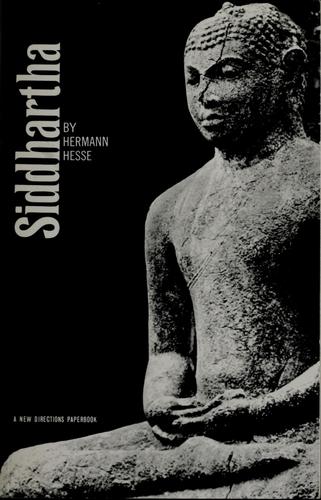
Siddhartha leaves his father, the ascetics and even the Buddha himself, because no teaching can give him what he is looking for. In the end he learns from a river and a ferryman who barely speaks. To his old friend he says that wisdom cannot be handed over in words. It can only be found, lived, experienced.
Where it meets Beyond Words
That is the difference the subtitle of Beyond Words points to: A Return to Knowing. Knowing, in the book’s sense, is not information. It is the quiet certainty that comes before explanation, the kind Siddhartha finds by the river and Curious finds in the Un-Wording.
Both books are also about return. Neither hero discovers something foreign; both recover something that was there from the start.
In the same tradition
Hesse wrote a Bildungsroman (a novel of formation) in the shape of a legend. Beyond Words is shorter and more poetic, but it shares the structure: departure, unlearning, return. Readers who loved one usually love the other.